Veliuttin Eddin Rifaat Pasha (‘Vely Pacha’) (1822-1891), Ottoman Ambassador
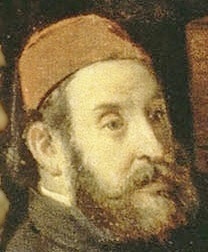
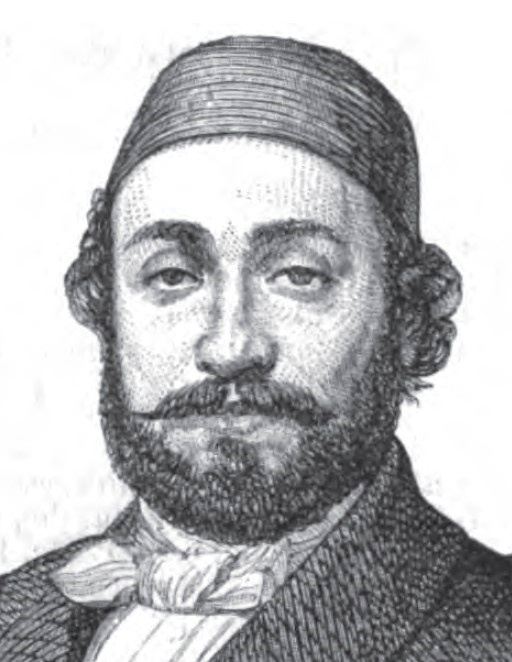
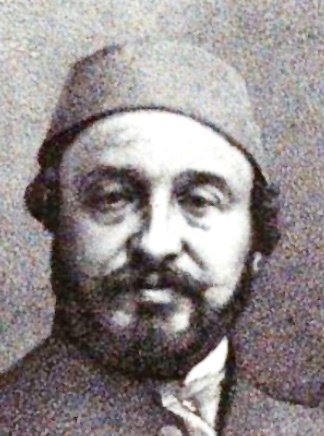
1st image: Soirée; 2nd: Gravure after photo Desderi (1854); 3rd: Photo by Desderi from journal 'Le Musée Francais' (1862).
Vely Pacha was a welcome guest at de Nieuwerkerke’s vendredi-soirées, his prominence in Soirée au Louvre likely tied to the Franco-Ottoman alliance during the Crimean War (1853–1856) against Russia, as well as his widespread popularity among the Parisian aristocracy. He was a persona gratissima (most welcome) at the Tuileries (the Imperial Court). Viel-Castel reports his presence of the vendredi-soirée of February 4, 1854. Few images of Vely Pacha are available.
Born in Crete as the eldest son of Grand Vizier Mustapha Najili Pacha and a Christian mother, Vely Pacha lived a life that seemed taken from the pages of One Thousand and One Nights. At just thirty years old, he was appointed ambassador of the Ottoman Empire in Paris, a position he held from November 1852 to February 1855. That month, painter Gabriel Lefébure (1819 - 1874, official court painter of Napoleon III) made an excellent portrait of him. It’s whereabouts are unknown.
A charismatic young diplomat and gifted orator with liberal views, he quickly established himself in the capital, attending numerous soirées and receptions. His charm and personal freedom, both in Paris and London, eventually reached his traditional father, who, upon hearing of his social exploits, summoned him back to Crete.
Before passing his ambassadorial duties to a member of a rival Ottoman family, Vely Pacha hosted a grand ball at the Turkish embassy on February 10, 1855—an event that outshone all others that winter, gathering the entirety of Parisian high society (including Princess Mathilde) in an extravagant, fairy-tale setting. The emperor sent him the Grand Croix of the Legion d’Honneur that morning so that he could wear it.
As Governor of Crete, he consoled himself by receiving all French newspapers, and allied himself with the English representative, Henry Ongley, to enact bold reforms, including the abolition of slavery and the banning of capital punishment. However, these progressive measures stirred unrest—provoking opposition from both Greek nationalists and Muslim fundamentalists, while exacerbating tensions among the English, Austrian, and French consuls stationed on the island. The instability of this distant Ottoman territory culminated in a revolt in 1858.
Forced into exile in Thessaloniki, Vely Pacha lived his final years in hardship, dying bankrupt and blind.