The History of Une Soirée au Louvre
Click images above to access other main pages. Click Une Soirée or outside this page for the interactive image.
Part One: The Vendredi-soirées at the Louvre
Within only a few months of assuming the directorship of the national museums on 25 December 1849, Count de Nieuwerkerke16 implemented one of his most characteristic initiatives: the establishment of weekly soirées at the Louvre.
Although receptions of various kinds had long been held in Paris, this was the first instance in which the State organized such gatherings on a regular, weekly basis. The purpose was multifold. The soirées created a space in which the museum’s deskbound conservators could interact directly with artists and with the broader cultural milieu; they enabled the Louvre to observe new artistic production and identify potential acquisitions; they offered artists access to a highly influential social network of roughly five hundred members of the Parisian elite; they served political ends by bringing together figures from diplomacy, administration, and the major professions; and, not least, they reinforced de Nieuwerkerke’s own position as the central node in these overlapping networks.
As one newspaper later observed (Salons de Paris, 1860), “the audience possessed two kinds of opulence: one part rich in gold, the other rich in art.”
de Nieuwerkerke's salon (click for large image)
The first public announcement of de Nieuwerkerke’s plan appeared in the Petit Courrier des Dames on 3 March 1850:
“A salon whose imminent opening is destined to cause a sensation in Paris. Count Nieuwerkerke, Director of Museums, will host a reception in his apartments at the Louvre. Such a salon will fill a gap in our Parisian world — it will be the link, the fusion of artists with society people and art lovers.”
The early soirées must have required considerable experimentation.
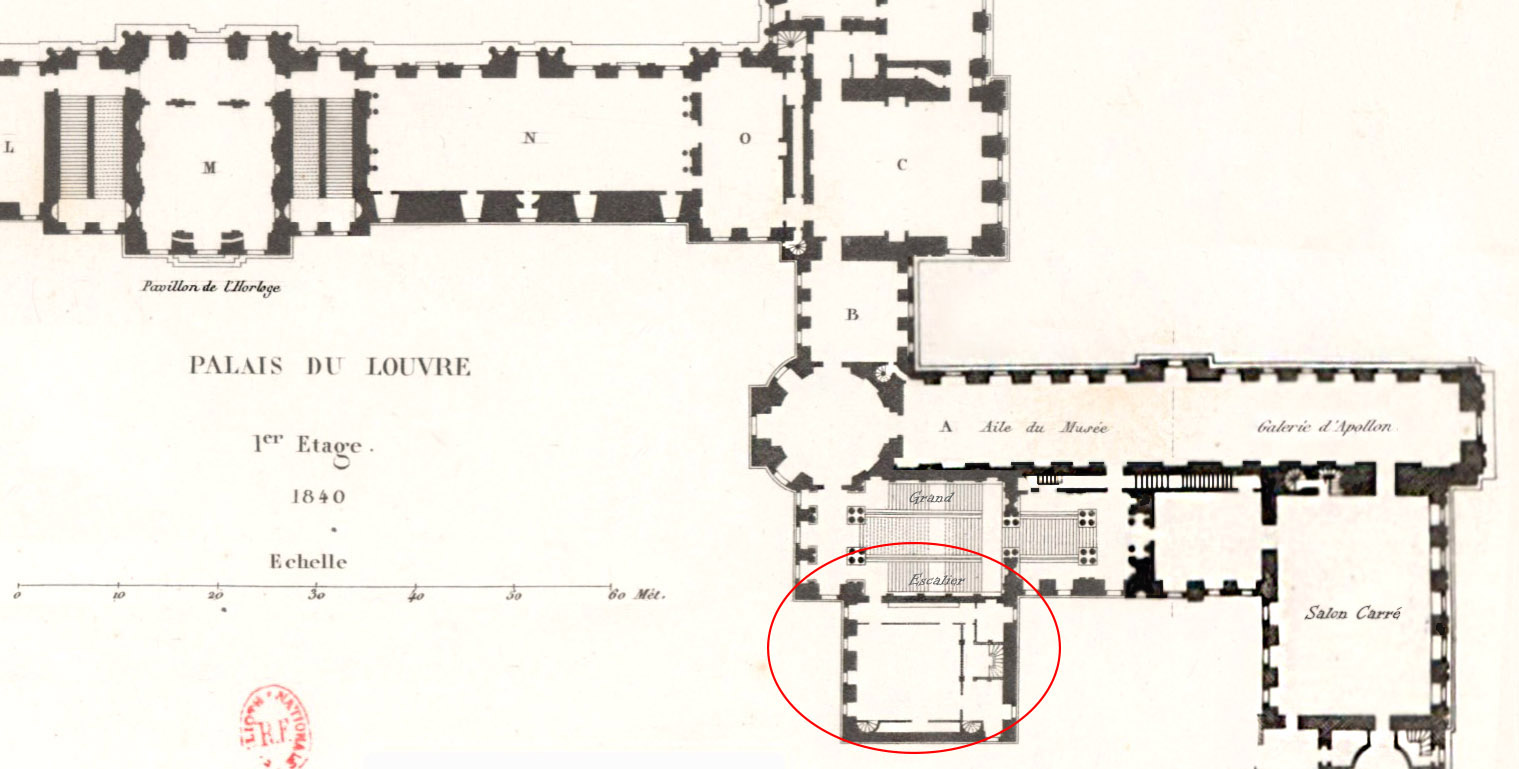
De Nieuwerkerke selected a salon on the top floor of an older pavilion of the Louvre, formerly the studio of the painter and museum director Auguste de Forbin.
The space stood above the Rotonde (Grand Vestibule) facing the Place du Carrousel (later Place Napoléon III), a courtyard on the south-west side toward the Tuileries; an area where, during the Revolution, the guillotine had frequently been erected.
Invitations were initially handwritten; later, a printed form was adopted. Because many invitations were effectively perpetual, attendance steadily increased, eventually surpassing two hundred guests per evening. By 1860, over 19,000 invitations had been written.
Marengo (opposite Louvre 1880)
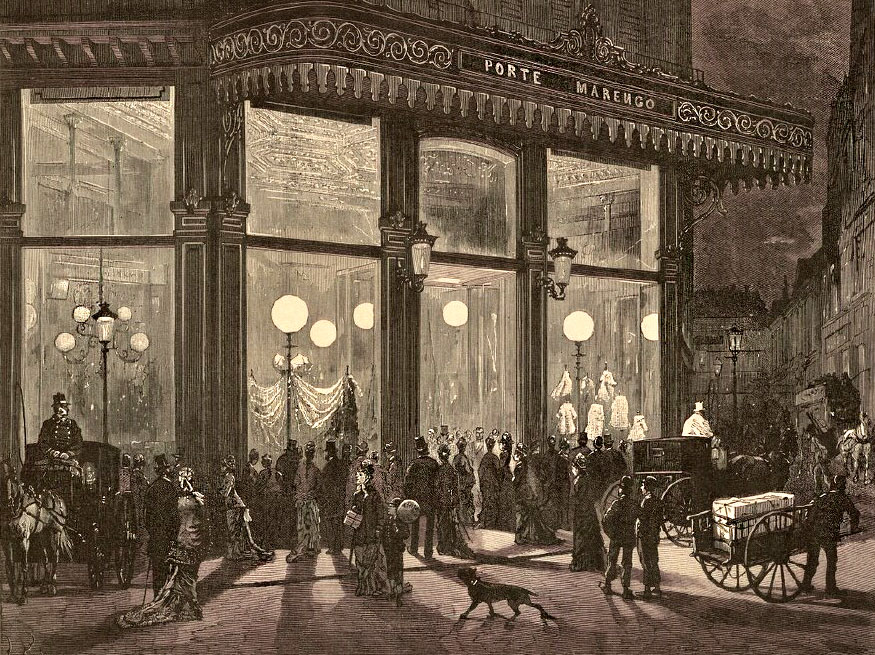
Guests could enter the salon either directly from the courtyard or be dropped by carriage at the Porte Marengo on the opposite side of the Louvre. Residents accustomed to a dark, silent palace were surprised to see the entrances illuminated.
Visitors ascended the Grand Escalier (designed by Percier and Fontaine, both Prix de Rome laureates and architects of the Arc de Triomphe du Carrousel) which led directly to the reception room. Initially drafty, with exposed wooden beams, the salon was soon richly furnished with Beauvais tapestries and objects from the Louvre’s collections; the ceiling was concealed beneath a light plastered wooden structure.
Conservator de Viel-Castel43 later described the space in vivid terms:
“[…] low doors, once secret, pierced here and there, leading to dark and tortuous staircases disappearing into the depths of the foundations. The wind blew through the door bays and window frames; humidity streamed down the walls, onto the wooden ceiling supports, onto the brick slabs that served as flooring.”
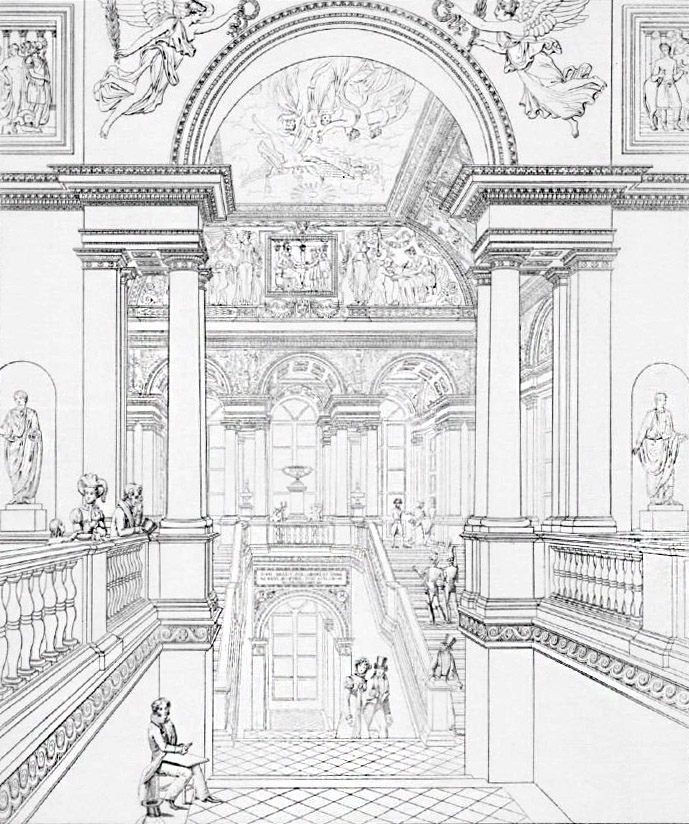
engraving Texier (1841)
From the reception salon, guests could access the Salon Carré (via what is now the Salle Percier-Fontaine) and, across the Grand Escalier, the Galerie d’Apollon.
This gallery, renovated by Visconti09 and Duban60 and adorned with paintings by Delacroix10 and Müller18. The major redesign of the Louvre between 1852 and 1857 extended the complex toward the Tuileries (today the location of the Mona Lisa) but also eliminated the original soirée salon, its staircases, and the associated apartments. The Grand Escalier was demolished in 1854 and replaced by the Daru staircase, now crowned by the Winged Victory of Samothrace. When I visited and studied this area in 2020, it became clear that Une Soirée au Louvre constitutes the only visual record of these remarkable gatherings in that part of the palace. Both the Friday-soirées and de Nieuwerkerke’s residence were subsequently relocated to the second floor of the Marengo Pavilion.
The soirées began at 8:30 p.m. Guests were formally announced by the usher before entering, where de Nieuwerkerke personally greeted each arrival. The events became so fashionable that, unusually for the period, guests arrived early and departed late.
In Une Soirée, the entrance is depicted on the left, at the moment when de Nieuwerkerke welcomes the architect Visconti.
The painted view of the salon is from the windows overlooking the courtyard. Although it shows daylight entering through the windows, most soirées, held during late winter, would have taken place in near darkness. On the right side of the reception hall, a smaller salon and spiral staircases provided access to de Nieuwerkerke’s adjacent apartments, and to the ground floor.
At 9:30 p.m., a lecture, musical interlude, or poetry reading commenced. Prompted by the usher, the audience maintained silence — necessary because the tapestries absorbed much of the sound. The journalist Heugel68 recalled the installation of a small platform in February 1854 to improve acoustics.
Villiers-St-Denis (presently a hospital)
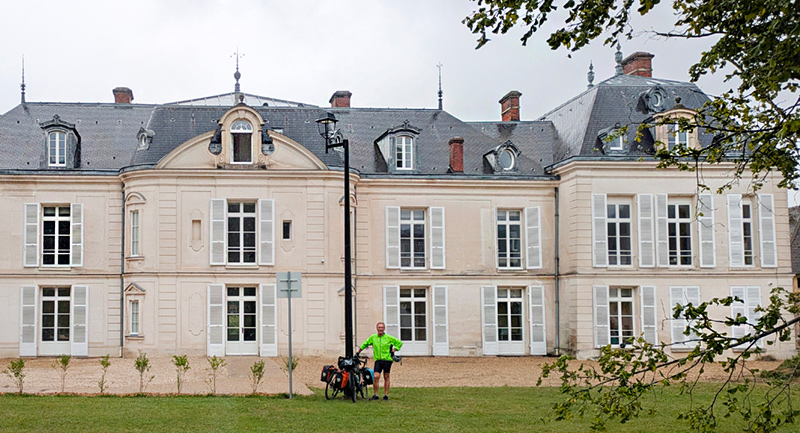
There were no elaborate dinners or buffets. However, given the Louvre’s established hospitality practices and its staff capable of serving hundreds, it is highly likely that light refreshments were offered: sweet beverages, pastries, biscuits, candied fruits, and modest quantities of wine or champagne (de Nieuwerkerke’s family estate was in Villiers-Saint-Denis, in the Champagne region).
De Nieuwerkerke quickly secured the interest of the aristocracy by inviting the celebrated tragedienne Rachel81, and he ensured press coverage to enhance the soirées’ visibility. Although programs were usually unannounced, an exception was made for Rachel’s recitation of Phèdre on 7 June 1850. The conductor and pianist Pasdeloup12 was given carte-blanche to organize the weekly musical performances, relying on the spontaneous availability of musicians. Lectures, such as those by the imperial physician Jobert de Lamballe01 (on anesthetics) or by the famed “lion-killer” Captain Gérard32, were likely scheduled in advance.
Based on contemporary newspapers and cultural listings, I infer that the first vendredi-soirée took place on 19 April 1850, the first of twelve sessions held until 5 July. The earliest review appeared in L’Illustration on 4 May, mentioning Ingres39 and several diplomats among the initial guests. Further reviews followed: Le Daguerrotype (12 June) reported on Rachel’s performance of 7 June, and on a poem by de Viel-Castel; additional notices appeared in Le Tintamarre and the Revue des Beaux-Arts. The soirées rapidly became the preferred meeting place of the elite.
After closing for the summer in early July, the gatherings resumed in January 1851. Traditionally held during Lent (carême), they were later extended to the end of the year. This pattern continued for nearly two decades, with occasional interruptions due to construction at the Louvre. When de Nieuwerkerke was unable to preside, his conservator de Viel-Castel assumed responsibility. Viel-Castel published a lengthy, laudatory article in Le Constitutionnel on 22 January 1854. Chennevières20 and other regular attendees likewise praised de Nieuwerkerke’s initiative, particularly recalling the final evenings of each season, when he led guests — illuminated by a hundred servants carrying reflector torches — through the galleries to admire the Venus de Milo (discovered in 1820).
With the setting and ritual of the soirées in place, we can now follow the artists who sought to capture them, beginning with Eugène Giraud11 and his remarkable caricatures.
>>> Part Two: Giraud’s caricatures and Biard’s painting